
Divination
The Fascinating World of
Divination: A Journey
Through Time and Methods
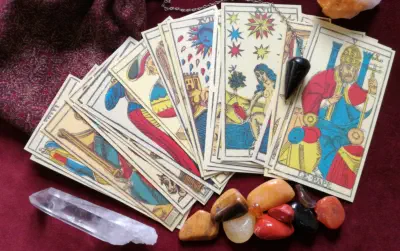
Divination, the practice of seeking knowledge of the future or the unknown by supernatural means, has been a crucial part of human history. From ancient civilizations to modern- day practices, divination has evolved, offering insights and guidance to those who seek it. A Brief History of Divination Divination is as old as civilization itself. Ancient cultures, including the Egyptians, Greeks, Romans, and Chinese, relied on various forms of divination to make critical decisions. These practices were often intertwined with religion and spirituality, serving as a bridge between the mortal and the divine. · Ancient Egypt: The Egyptians used dream interpretation, known as oneiromancy, to receive messages from their gods. They also relied on astrology and scrying, where they would gaze into reflective surfaces like water or polished stones. · Greece and Rome: The Greeks and Romans practiced augury, interpreting the behavior of birds, and hepatomancy, examining the liver of sacrificed animals for omens. The Oracle of Delphi is one of the most famous divinatory sites, where priestesses would deliver cryptic predictions. · China: The I Ching, or Book of Changes, is an ancient Chinese divination text dating back to the Western Zhou period. It uses hexagrams to provide answers and guidance. Types of Divination and Their Utilization 1. Tarot Reading History: Originating in the 15th century in Europe as playing cards, tarot decks were later adapted for divination purposes in the 18th century. Utilization: Tarot reading involves a deck of 78 cards, each with its symbolism and meaning. A tarot reader shuffles the cards and lays them out in specific spreads, interpreting the cards to provide insights into the querent's past, present, and future. 2. Astrology History: Astrology, the study of celestial bodies' movements and positions, dates back to ancient Babylon around the 2nd millennium BCE. It was later refined by the Greeks and spread across the world. Utilization: Astrologers create natal charts based on the positions of the planets at the time of an individual's birth. These charts are used to glean insights into personality traits, life events, and compatibility with others. 3. Runes History: Runes are ancient alphabets used by Germanic and Scandinavian tribes. The earliest known runic inscriptions date back to around 150 CE. Utilization: Runes are typically carved onto small stones or pieces of wood. During a rune casting, the practitioner draws a set of runes and interprets their meanings based on their positions and symbols. 4. I Ching (Yijing) History: The I Ching, one of the oldest Chinese texts, has been used for divination since the Western Zhou period (1046-771 BCE). Utilization: The I Ching uses 64 hexagrams composed of six lines each. Practitioners cast coins or yarrow sticks to form a hexagram, which is then interpreted using the I Ching text. 5. Palmistry History: Palmistry, or chiromancy, has roots in ancient India, China, and Egypt. It was popularized in the West during the Renaissance. Utilization: Palmists examine the lines, shapes, and mounts on a person's hand to interpret their character and predict future events. 6. Scrying History: Scrying, also known as crystal gazing, has been practiced since ancient times. The Egyptians, Greeks, and Celts all used reflective surfaces for divination. Utilization: Scryers gaze into mirrors, crystals, water, or other reflective surfaces to receive visions or messages. The images seen are interpreted to provide guidance or answers. 7. Pendulum Dowsing History: Pendulum dowsing has been used for centuries, with records dating back to the Middle Ages in Europe. Utilization: A pendulum, often a crystal on a chain, is held above a surface. The dowser asks questions, and the pendulum's movements (swinging, circling) provide yes or no answers. Divination is a vast topic with many intricacies and variations. The content presented here is merely an introduction to some of the most popular forms of divination. Continued research and exploration will reveal even more fascinating aspects of this ancient practice. Other forms of divination include tea leaf reading, dowsing rods, oracle cards, numerology, and more. Each offers its own unique insights and methods for tapping into the spiritual realm. As you continue with your exploration of divination, remember to always approach with respect and a willingness to learn. With practice, patience, and an open heart, you may find that divination becomes a valuable tool, providing you clarity and wisdom when you need it most. Delving deeper into these ancient practices can also provide a fascinating glimpse into human history, and the myriad ways humankind has sought to understand the unknown. Happy exploring!

© 2026 It’s About Spirit and Moonlit Bridge Productions. All Rights Reserved

Share Your Story
Would you like to be a
guest on a future
episode of It’s About
Spirit? Do you have
expertise, or a
compelling or inspiring
Spirit related, personal
story you would like to
share? If so, we would
love to hear from you!
Contact us HERE!









































© 2026 It’s About Spirit and Moonlit Bridge Productions.
All Rights Reserved

Divination
The Fascinating World of
Divination: A Journey
Through Time and Methods
Divination, the practice of seeking knowledge of the future or the unknown by supernatural means, has been a crucial part of human history. From ancient civilizations to modern- day practices, divination has evolved, offering insights and guidance to those who seek it. A Brief History of Divination Divination is as old as civilization itself. Ancient cultures, including the Egyptians, Greeks, Romans, and Chinese, relied on various forms of divination to make critical decisions. These practices were often intertwined with religion and spirituality, serving as a bridge between the mortal and the divine. · Ancient Egypt: The Egyptians used dream interpretation, known as oneiromancy, to receive messages from their gods. They also relied on astrology and scrying, where they would gaze into reflective surfaces like water or polished stones. · Greece and Rome: The Greeks and Romans practiced augury, interpreting the behavior of birds, and hepatomancy, examining the liver of sacrificed animals for omens. The Oracle of Delphi is one of the most famous divinatory sites, where priestesses would deliver cryptic predictions. · China: The I Ching, or Book of Changes, is an ancient Chinese divination text dating back to the Western Zhou period. It uses hexagrams to provide answers and guidance. Types of Divination and Their Utilization 1. Tarot Reading History: Originating in the 15th century in Europe as playing cards, tarot decks were later adapted for divination purposes in the 18th century. Utilization: Tarot reading involves a deck of 78 cards, each with its symbolism and meaning. A tarot reader shuffles the cards and lays them out in specific spreads, interpreting the cards to provide insights into the querent's past, present, and future. 2. Astrology History: Astrology, the study of celestial bodies' movements and positions, dates back to ancient Babylon around the 2nd millennium BCE. It was later refined by the Greeks and spread across the world. Utilization: Astrologers create natal charts based on the positions of the planets at the time of an individual's birth. These charts are used to glean insights into personality traits, life events, and compatibility with others. 3. Runes History: Runes are ancient alphabets used by Germanic and Scandinavian tribes. The earliest known runic inscriptions date back to around 150 CE. Utilization: Runes are typically carved onto small stones or pieces of wood. During a rune casting, the practitioner draws a set of runes and interprets their meanings based on their positions and symbols. 4. I Ching (Yijing) History: The I Ching, one of the oldest Chinese texts, has been used for divination since the Western Zhou period (1046-771 BCE). Utilization: The I Ching uses 64 hexagrams composed of six lines each. Practitioners cast coins or yarrow sticks to form a hexagram, which is then interpreted using the I Ching text. 5. Palmistry History: Palmistry, or chiromancy, has roots in ancient India, China, and Egypt. It was popularized in the West during the Renaissance. Utilization: Palmists examine the lines, shapes, and mounts on a person's hand to interpret their character and predict future events. 6. Scrying History: Scrying, also known as crystal gazing, has been practiced since ancient times. The Egyptians, Greeks, and Celts all used reflective surfaces for divination. Utilization: Scryers gaze into mirrors, crystals, water, or other reflective surfaces to receive visions or messages. The images seen are interpreted to provide guidance or answers. 7. Pendulum Dowsing History: Pendulum dowsing has been used for centuries, with records dating back to the Middle Ages in Europe. Utilization: A pendulum, often a crystal on a chain, is held above a surface. The dowser asks questions, and the pendulum's movements (swinging, circling) provide yes or no answers. Divination is a vast topic with many intricacies and variations. The content presented here is merely an introduction to some of the most popular forms of divination. Continued research and exploration will reveal even more fascinating aspects of this ancient practice. Other forms of divination include tea leaf reading, dowsing rods, oracle cards, numerology, and more. Each offers its own unique insights and methods for tapping into the spiritual realm. As you continue with your exploration of divination, remember to always approach with respect and a willingness to learn. With practice, patience, and an open heart, you may find that divination becomes a valuable tool, providing you clarity and wisdom when you need it most. Delving deeper into these ancient practices can also provide a fascinating glimpse into human history, and the myriad ways humankind has sought to understand the unknown. Happy exploring!

Share Your Story
Would you like to be a guest on a future
episode of It’s About Spirit? Do you have
expertise, or a compelling or inspiring Spirit
related, personal story you would like to
share? If so, we would love to hear from
you! Contact us HERE!


- Home
- About
- angels & guides
- Store
- podcast
- spiritual seeker
- world religions
- intuition
- psychic ability
- mediumship
- dreams, signs & synchronicity
- divination
- near death experience
- reincarnation
- energy balancing & healing
- power of prayer
- unexplained
- meditation, mantras & affirmations
- scientific breakthroughs
- Contact